Spoke Hole Pull-Through Test: Ensuring Resistance to Extreme Tensions

The spoke hole area—the inner circumference where the nipples are seated—is a critical part of a rim’s structural integrity. To strengthen this area, manufacturers typically reinforce the rim either by adding continuous layers around the circumference or by reinforcing each individual spoke hole. While the former method is faster, it tends to add unnecessary weight and uses more material. The latter, though more precise and time-consuming, is a more efficient way to reduce weight while maintaining strength. Regardless of the approach, ensuring that the spoke holes can withstand high tension forces is essential to maintaining the overall performance and safety of the wheel.


Test Standard

At NTP, our rigorous testing standard requires that no spoke hole crack under a load of 350kgf. Typically, spoke pull-out forces exceed 420kgf. However, we offer customized testing standards based on specific performance requirements for our clients' products.

Test Goal

The goal of the spoke hole pull-through test is to assess the rim's ability to resist extreme forces applied by the spokes. During aggressive riding, some spokes may experience very high tensions, which could potentially damage the rim and compromise the wheel’s integrity—rendering it unrideable and possibly unsafe for the rider. The test ensures that the rim holes can endure these forces without failure.

Test Equipment

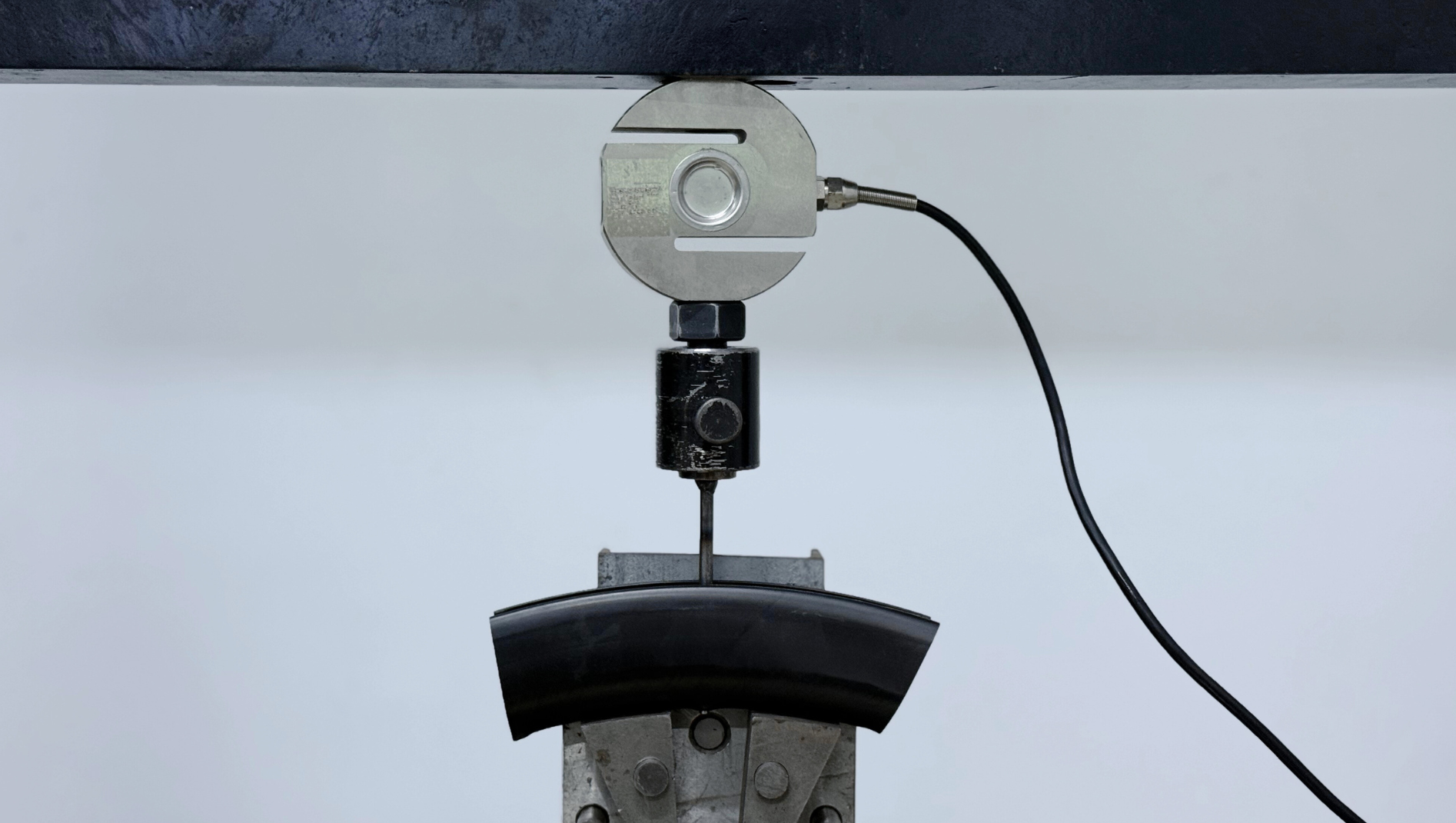
We utilize a Universal Testing Machine (UTM) for the spoke hole tensile strength test. The UTM features a rigid, curved base that matches the shape of the rim’s inner circumference, as well as a compression rig and ejector pin to apply a controlled load to the spoke holes. The sensor integrated into the compression rig automatically records the applied pulling force during the test.

Test Method

Step 1: Sample Preparation: The rim is cut into 6 to 10 evenly sized pieces to ensure balanced performance across all spoke holes.
Step 2: Initial Setup: A sample rim cutaway (Cutaway #1) is placed securely onto the testing rig. The compression rig is lowered, and the ejector pin passes through the rim bed to make contact with the spoke hole.
Step 3: Test Execution: The compression fixture applies downward force at a controlled rate. The force gradually increases until the ejector pin pulls through the rim hole.
Step 4: Repetition: Once the first test is completed, the rim cutaway is replaced with the next section, and the process is repeated until all sections are tested.

Sample Test Report

Example Profile

Model

Size

Width

Depth

Weight (Stated)

Measured Weight

G28-45

700C (622-28)

28.5/34.1mm

45mm

400g

395g

Test Report

Cutaway No.

1

2

3

4

5

6

Breakage Force

435.58kgf

434.90kgf

440.25kgf

438.45kgf

436.64kgf

441.02kgf

Average Breakage Force

437.8kgf

Result

PASS

PASS

PASS

PASS

PASS

PASS


For all six rim cutaways, the average spoke and rim disassembling force was 437.8kgf, which exceeds the required 350kgf standard, confirming the strength and durability of the spoke holes.
Get Your Custom Quote in 24h
Full Name*
Phone No
Email*
Message*
We use Cookie to improve your online experience. By continuing browsing this website, we assume you agree our use of Cookie.