Rim Roundness & Flatness Testing: Ensuring Precision and Stability

When it comes to bike rims, achieving perfect roundness and flatness might not always be possible. However, it's critical to ensure that these factors fall within specific tolerances to guarantee a consistent wheel-building experience and stability at high speeds. Even small deviations can affect performance, so we take every step to ensure your rims are up to standard.


Test Standard

Tolerance range: within 0.3mm

Test Facility & Equipment

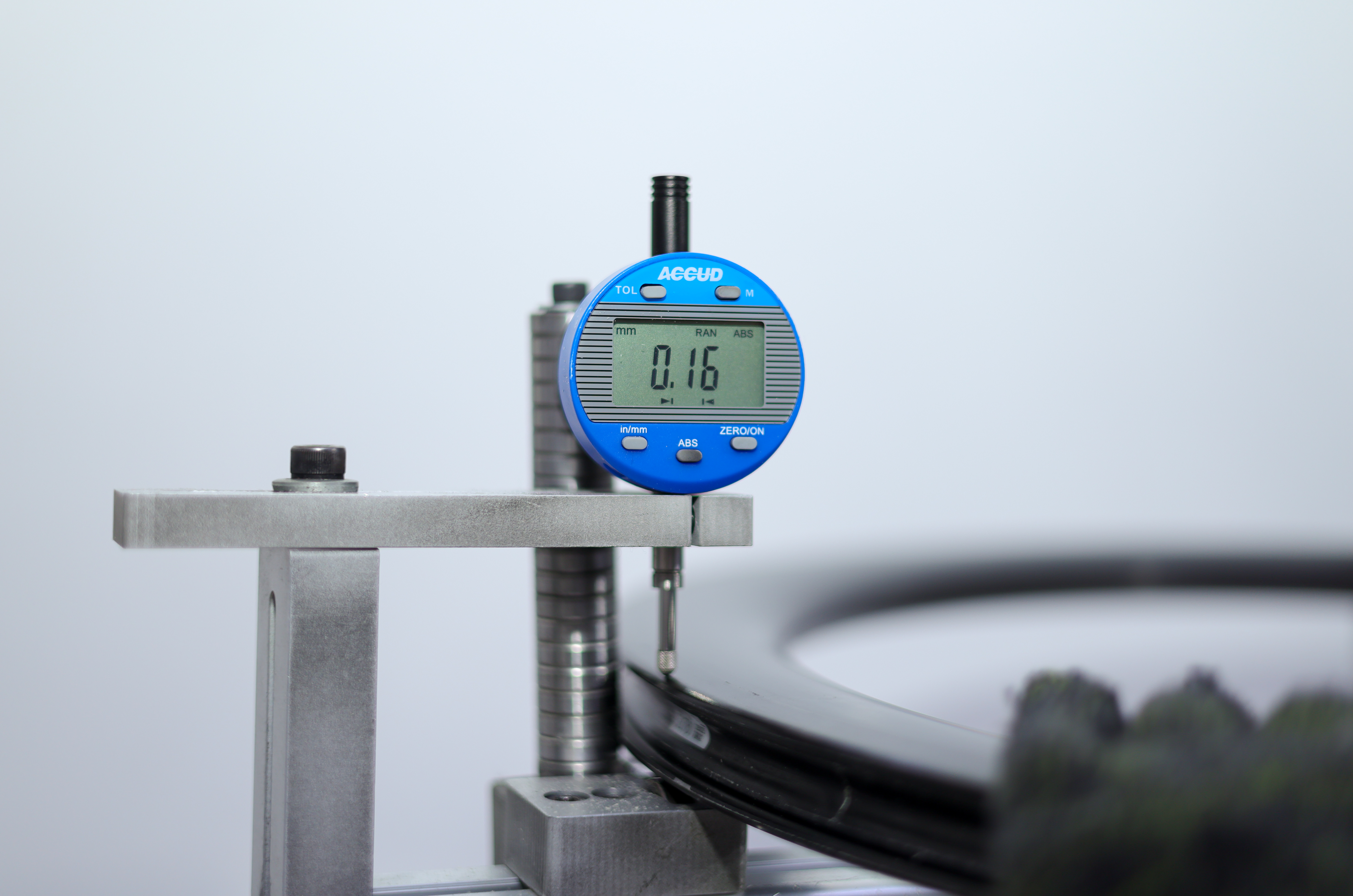
We use specially designed roundness and flatness test jigs that measure both radial and lateral run-outs with precision up to 0.01mm. These devices rotate the rim, automatically recording readings to ensure accuracy and consistency. 

Rotation Speed

Precision

Test Sides

600rpm

0.01mm

Both rim sides

Test Method

Our roundness and flatness tests follow a precise method, with testing conducted on two separate rigs. While the equipment and setup are different, the testing process is the same for both.

Step 1: Position and clamp the rim securely onto the testing rig.
Step 2: Tare the digital scale and bring the cylindrical tips to the edge of the rim.
Step 3: Press the “rotate” button to start the rim’s controlled rotation.
Step 4: As the rim rotates, lateral and radial movements are measured and recorded automatically.
Step 5: Flip the rim and repeat the process for the opposite side.

Sample Test Report

Example Profile

Model

Size

Width

Depth

Weight (Stated)

Measured Weight

EN32-23

29er (622-32)

32/39mm

22/23mm

460g

459g

Test Results

Roundness

Flatness

Min

Max

Min

Max

0.21

0.27

0.25

0.3

0.06mm deviation

0.05mm deviation


In this sample test, the rim's roundness and flatness fall within the specified tolerance range, ensuring it meets the strict performance standards on the road.
Get Your Custom Quote in 24h
Full Name*
Phone No
Email*
Message*
We use Cookie to improve your online experience. By continuing browsing this website, we assume you agree our use of Cookie.