A carbon wheel’s lifespan and performance depend on its ability to withstand repeated stress over time. The wheel fatigue test simulates the repeated loads and impacts that a wheel experiences during real-world riding conditions. From rider weight and cycling style to the terrain, the test is designed to predict how the wheel will hold up under continuous use.
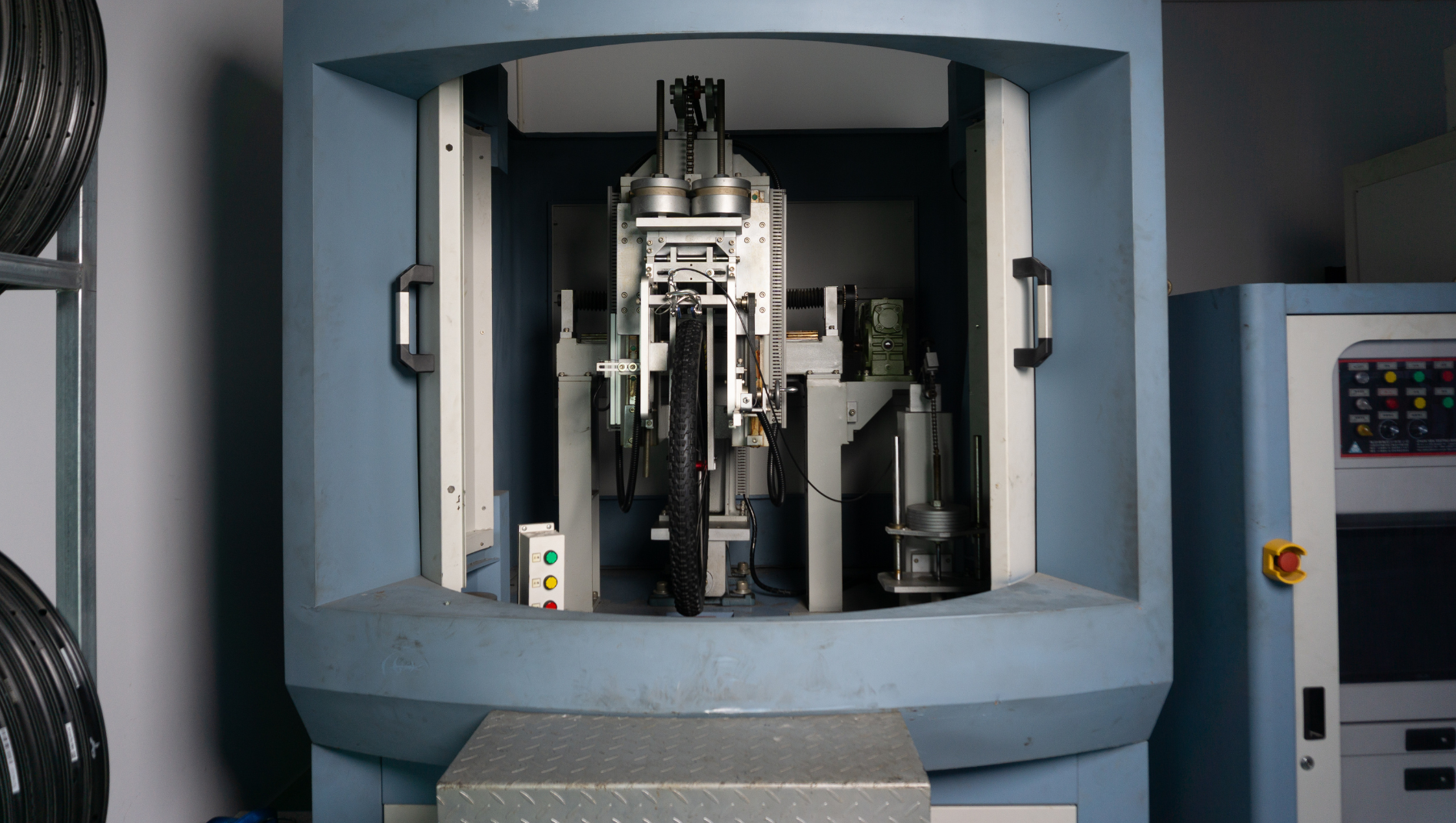
Test Standard
ISO standards require that a wheel remain intact after 750,000 cycles of stress. In our in-house lab, we go above and beyond, pushing the standard to 800,000 cycles to ensure superior durability. We conduct separate tests for road and mountain bike wheels, taking into account the differing stresses they endure on various terrains.
Test Goal
The primary goal of the fatigue test is to predict a wheel's long-term performance—whether it’s over extended distances or through frequent use. By testing not just the rim but the entire wheel system—including the tire and hub—we gain insights into the overall stability and reliability of the product.
Test Equipment
The fatigue test is conducted using specialized equipment designed to simulate real-world cycling conditions. The machine has two key components:
- Suspended Adjustable Load Platform: This platform holds the sample wheel in place and can be remotely controlled to move up and down, as well as side to side. The latter simulates the cornering and sprinting forces experienced by riders.
- Roller with Tailored Diameter: The roller is fitted with evenly spaced threaded holes to mount stumbling blocks, simulating obstacles found on various terrains.
The platform’s tilt angle and frequency of movement are customizable based on client specifications, allowing for testing across a range of riding conditions.
|
Rotation Speed
|
Tilt (left)
|
Tilt (right)
|
Swing speed
|
Load Range
|
|
20~100km/h
|
45° |
45° |
0~100
|
40-90kg |
Test Method
Step1: The wheel is built to precise trueness and centering measurements, with the tire mounted and inflated to 90% of its maximum pressure (based on the lower pressure limits between the tire and rim manufacturers).Step 2: The required load (typically 75kg for in-house tests) is applied, and the wheel is securely mounted onto the testing rig.Step 3: One or more stumbling blocks are installed onto the roller, spaced evenly if multiple blocks are used. The block height is calibrated to match the test requirements.Step 4: The load platform is lowered so that the tire tread contacts the roller. The rotation speed, tilt angle (leftward and/or rightward), and swing frequency are adjusted to simulate real-world cycling dynamics.Step 5: The test begins, and a computer records the cycles, time, and distance. Our quality control technician monitors the wheel’s condition daily, ensuring it remains in testable condition.Step 6: Once the specified cycles are complete, the wheel is removed, the tire is deflated, and a thorough inspection of the rim and components is conducted to check for any signs of damage or abnormal wear.
Sample Test Report
Example profile
|
Model
|
Size
|
Width
|
Depth
|
Weight (Stated)
|
Hub
|
Spokes
|
Tire
|
|
R23-55
|
700C (622-23)
|
23/28.5mm
|
55mm
|
415g
|
DT SWISS 350 24H
|
Sapim CX Ray
|
Maxxis Pursuer 700*25C
|
Test Result
|
Speed
|
Load
|
Tilt
|
Stumbling Block Height
|
Block number
|
Cycles
|
Distance
|
|
40km/h
|
75kg
|
0°/no tilt
|
5mm
|
1
|
800,000
|
960km
|
|
Result
|
|
After 800,000 cycles, the wheel showed no damage to the rim or other parts. The test passed successfully.
|

